
Greenwood County Criminal History Checks
Begin a Greenwood County criminal record search with the record closest to the event. The South Carolina Judicial Branch Case Records Search leads to Greenwood court dockets. The county detention page points to current custody. SLED CATCH supplies a paid statewide name check built from fingerprint-supported submissions. Each answers a different question, so matching a name in one source should lead to a second source that shows the charge, custody status, or final outcome.
Gather the full name, likely spelling variants, birth date when the official form permits it, approximate event date, and the agency or court involved. Then work through the layers in order:
- Select Greenwood and the likely court in the Judicial Branch gateway, then search by case number or party name.
- Check the county detention link for a recent booking that may not yet have a complete docket.
- Use SLED CATCH for a statewide, name-based South Carolina criminal history.
- Read each charge and disposition separately instead of treating the arrest as the outcome.
- Ask the Clerk, arresting agency, or Sheriff's Records Division for missing papers or certified copies.
Two 528 Addresses Split Greenwood County Records
Greenwood County has a simple trap. Court records and law-enforcement records use buildings with the same street number. The Greenwood County Courthouse at 528 Monument Street houses the Clerk of Court and General Sessions counter. Warrants filed with the court, bonds, indictments, docket papers, fines, restitution, and certified dispositions belong there. The public counter is open from 8:30 a.m. to 5:00 p.m. on weekdays, excluding major holidays, and the Clerk's telephone is 864-942-8575.
The Law Enforcement Center at 528 Edgefield Street holds the Sheriff's Records Division, Warrants Division, and Detention Center. County incident reports, booking questions, jail custody, and warrant-service questions start at that address. The official Sheriff's Office profile identifies the agency behind those records.
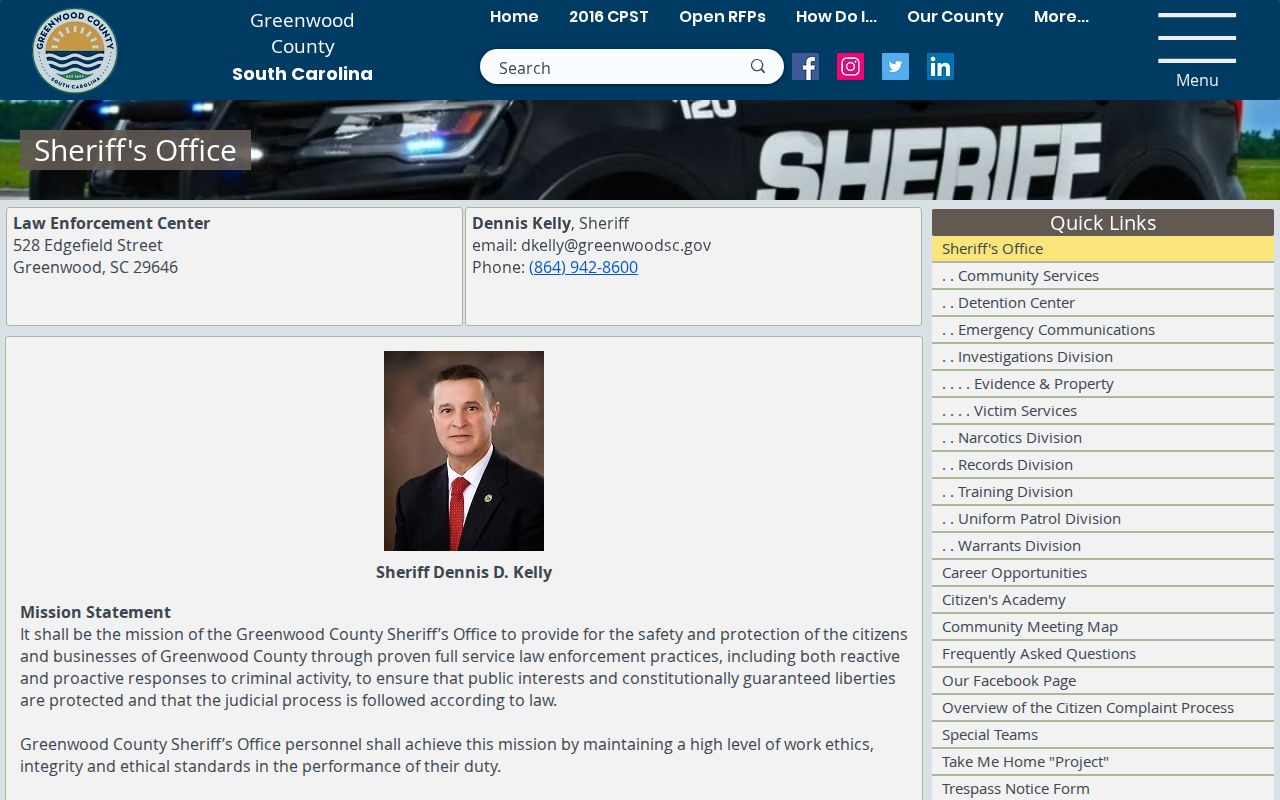
The image reinforces the key routing point: the sheriff's office is a law-enforcement custodian, while the courthouse clerk is the court-file custodian.
Clerk of Court
528 Monument Street
Greenwood, SC 29646
864-942-8575
Sheriff's Records Division
528 Edgefield Street
Greenwood, SC 29646
864-942-8600
The Records Division publishes no dedicated request form, online request portal, law-enforcement fee schedule, turnaround estimate, or records-counter hours. A useful first call should identify the record type, approximate date, event location, involved party, and report or booking number if known. Ask whether the item can be inspected, sent electronically, supplied on paper, or certified. Also ask for a cost estimate before chargeable work. Narrow facts help the staff distinguish a sheriff incident number from a court case number.
When an informal call does not resolve the request, South Carolina FOIA supplies a written route. Describe an existing record with enough detail to locate it and name the format wanted. The agency need not create a new report or analysis. If part of the file is withheld, request the exemption and redaction basis in writing. City incidents still go to the city police department that produced the report, not automatically to the county sheriff.
Official Background Checks in South Carolina
The South Carolina Law Enforcement Division, Criminal Justice Information Services, keeps the Computerized Criminal History repository. Its public product is SLED CATCH. Members of the public may accept the terms and order a South Carolina-only name check. CATCH uses the name, birth date, and any voluntarily supplied Social Security number to search records supported by fingerprint submissions. It does not search wanted-person data or the sex offender registry.
A personal federal review follows a different path. The subject may use the FBI Identity History Summary process, submit fingerprints, and pay the FBI's current $18 charge. That product draws on FBI-maintained identity history and is not a Greenwood County court docket. IdentoGO and local law-enforcement agencies may capture prints, but no permanent Greenwood vendor address or sheriff fingerprint fee was confirmed. Verify a capture site before traveling.
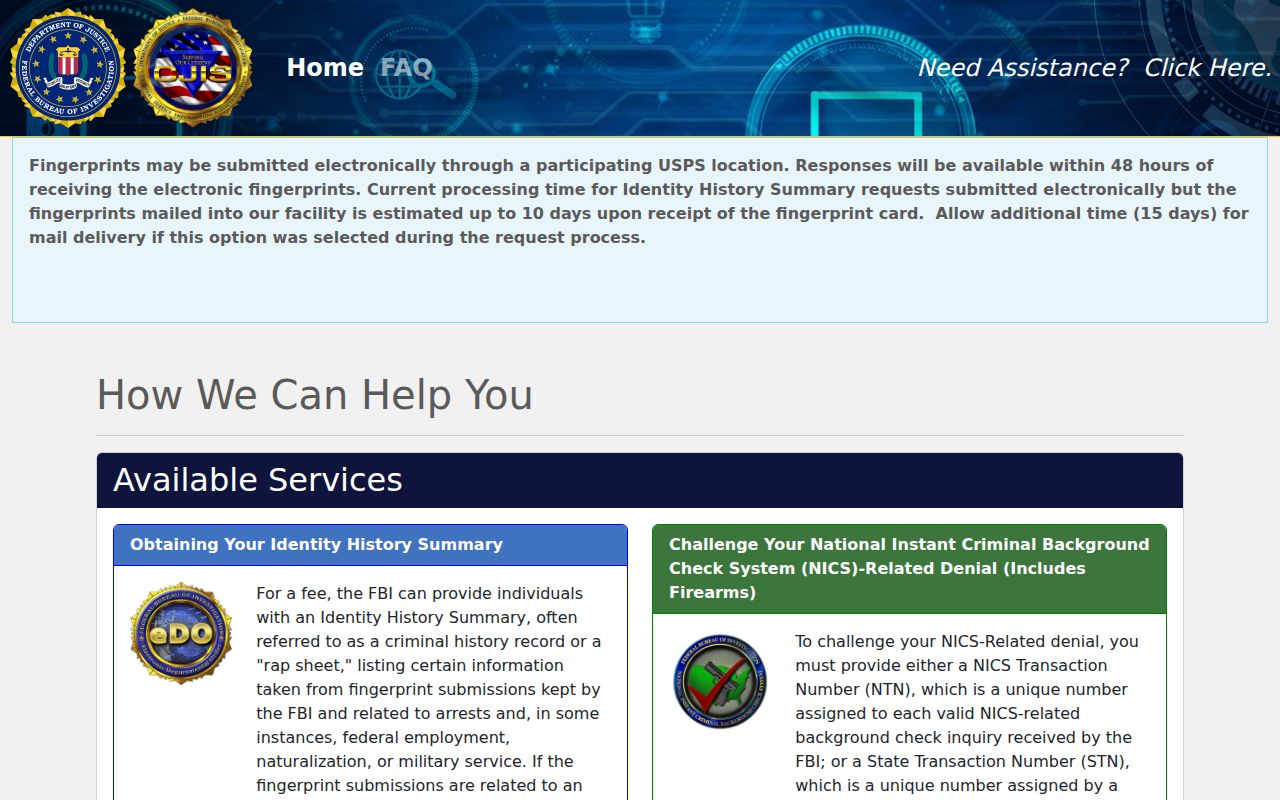
The FBI entry screen shown above belongs to the person reviewing their own federal identity history, not to the county case or jail search.
SLED CATCH and Greenwood County Checks
CATCH charges $25 for the report. Since July 1, 2026, the online system also discloses a $1.43 service fee on that standard purchase. Mail requests cost $25 without the online service charge, but require the official form, guaranteed payment, and a self-addressed stamped envelope. Business checks, certified checks, cashier's checks, and money orders are accepted by mail. Cash and personal checks are not. The requester must state when certification or notarization is needed.
| Channel | Base Cost | Key Requirement |
|---|---|---|
| Online CATCH | $25 plus $1.43 | Accept terms, choose user type, enter required name and birth data |
| Mail to SLED | $25 | Official form, approved payment, and stamped return envelope |
| FBI personal review | $18 plus capture costs | Applicant data and fingerprints |
The official CATCH opening screen presents the terms and statewide search entry point.
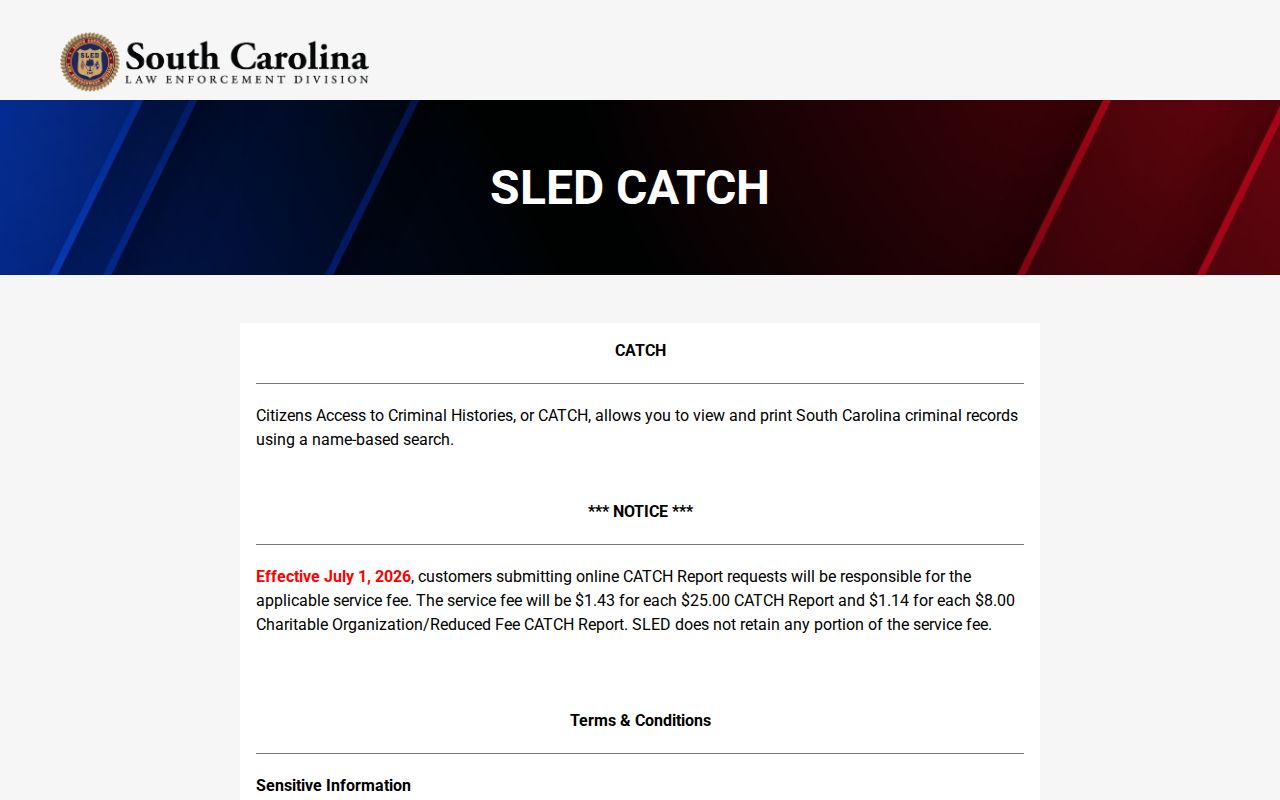
That opening view puts the terms and fee notice ahead of the subject search, which helps separate CATCH from Greenwood's free court docket.
The next CATCH user-type step comes before subject information is entered.
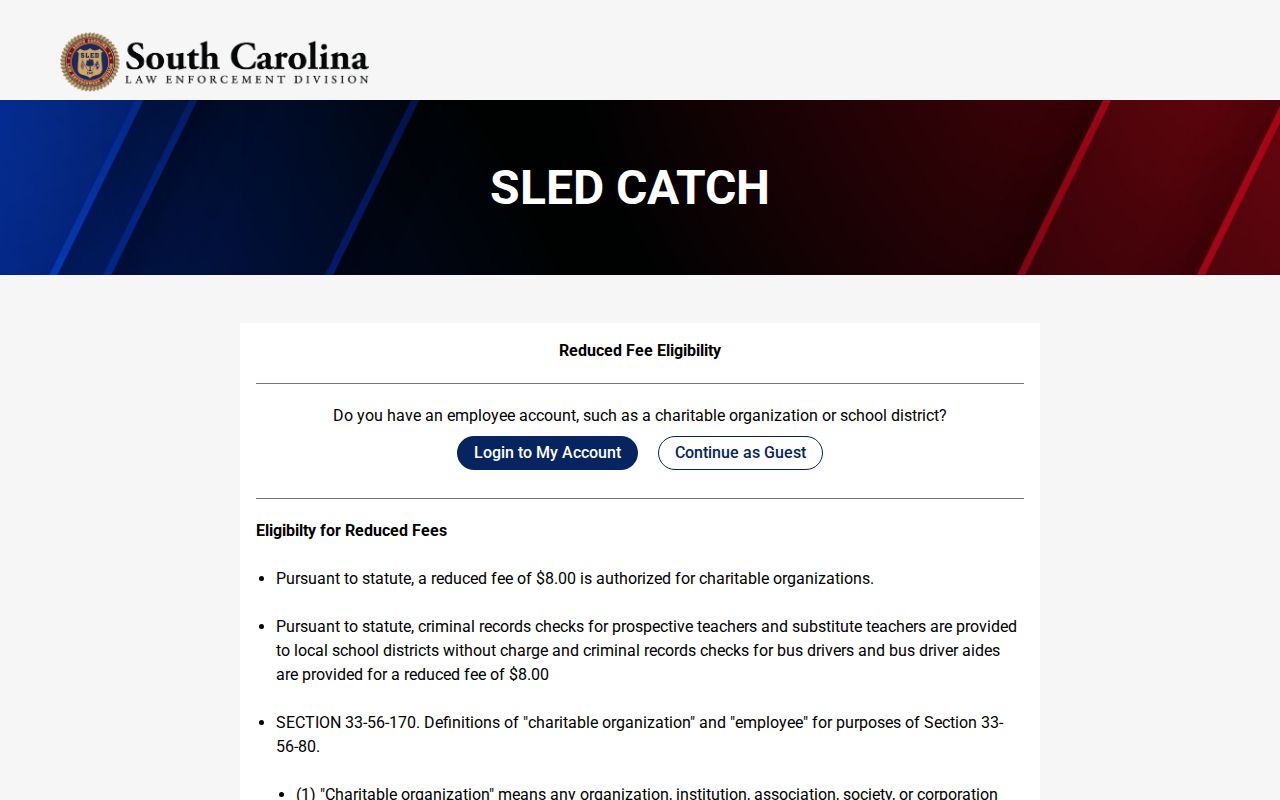
These screens show why the state product must be treated as its own paid workflow, not as a free extension of Greenwood's court index.
Kinds of Criminal Records
A Greenwood County arrest can create several public records. The arresting agency writes the incident narrative. The Detention Center records intake and custody. A judge enters bond or process information. The court creates a case if charges are filed. SLED then connects fingerprint-supported arrest cycles to reported outcomes. The record holder changes with each step.
- Incident and arrest reports describe alleged events and officer action at the agency that investigated.
- Booking records show county jail intake, received charges, bond, custody, and release information.
- Court case files track filed charges, hearings, pleas, dispositions, sentences, fines, and restitution.
- Repository histories group fingerprint-supported South Carolina cycles reported to SLED.
- Supervision and registry files remain in separate state systems with different legal purposes.
That split is why a current jail entry cannot prove a conviction, and why a CATCH result cannot replace the court's certified disposition. The county's court case lookup is the better route for filed charges and judicial outcomes.
Greenwood County Criminal History Gap
SLED published an unusually clear warning in 2026. Fingerprints are the link between a charge and the Computerized Criminal History repository. When SLED examined 2025 direct indictments, only seven percent had reached the repository, largely because the subjects had not been fingerprinted again. A direct indictment begins in court without the ordinary arrest-and-print path, so the court file may exist while the statewide name check has no matching cycle.
This gap changes the way Greenwood County criminal history should be read. A clear CATCH result does not promise that no Greenwood General Sessions case exists. Search the Public Index as a separate layer, and ask the Clerk for documents when an online docket lacks an image. In the other direction, CATCH may show fingerprint-supported events from South Carolina counties beyond Greenwood. Compare identity facts, contributing agency, charge, and final disposition before concluding that two records describe the same event.
Record flow: Arresting agency › Detention fingerprints › SLED repository › court disposition update.
Greenwood County Criminal Records: What They Contain
The fields depend on the source. A repository history centers on identity and fingerprinted arrest cycles. A Greenwood court docket centers on the case, parties, charges, events, and judgment. A jail profile centers on intake and current custody. Treating them as interchangeable can turn an old booking charge into a false claim about the final case result.
| Name & Identifiers | Reported name, aliases, birth data, SID, and sometimes an FBI identifier in repository records. |
|---|---|
| Arrest / Booking Data | Agency, arrest or intake date, booking identifier, received charge, bond, custody, and release details. |
| Charges & Statutes | Count-level description, offense code or statute when reported, and dates tied to the alleged conduct. |
| Disposition | Pending, guilty, dismissed, nol pros, acquitted, transferred, or another charge-level result. |
| Sentence | Custody, probation, fines, assessments, restitution, and other terms entered by the court. |
| Custody / Supervision | County jail, state prison, or current SCDPPPS status, each checked in its own system. |
Several short docket terms carry most of the outcome meaning. Read them at the charge level because one Greenwood County case may contain both pending and resolved counts.
- Disposition
- The recorded outcome for a charge or case.
- Nol pros
- Short for nolle prosequi, meaning the prosecutor ended the charge without a trial finding of guilt.
- General Sessions
- South Carolina Circuit Court's criminal branch for felony and other indictable cases.
- SID
- A state identification number tied to a criminal-history identity.
Greenwood County Jail and Prison Records
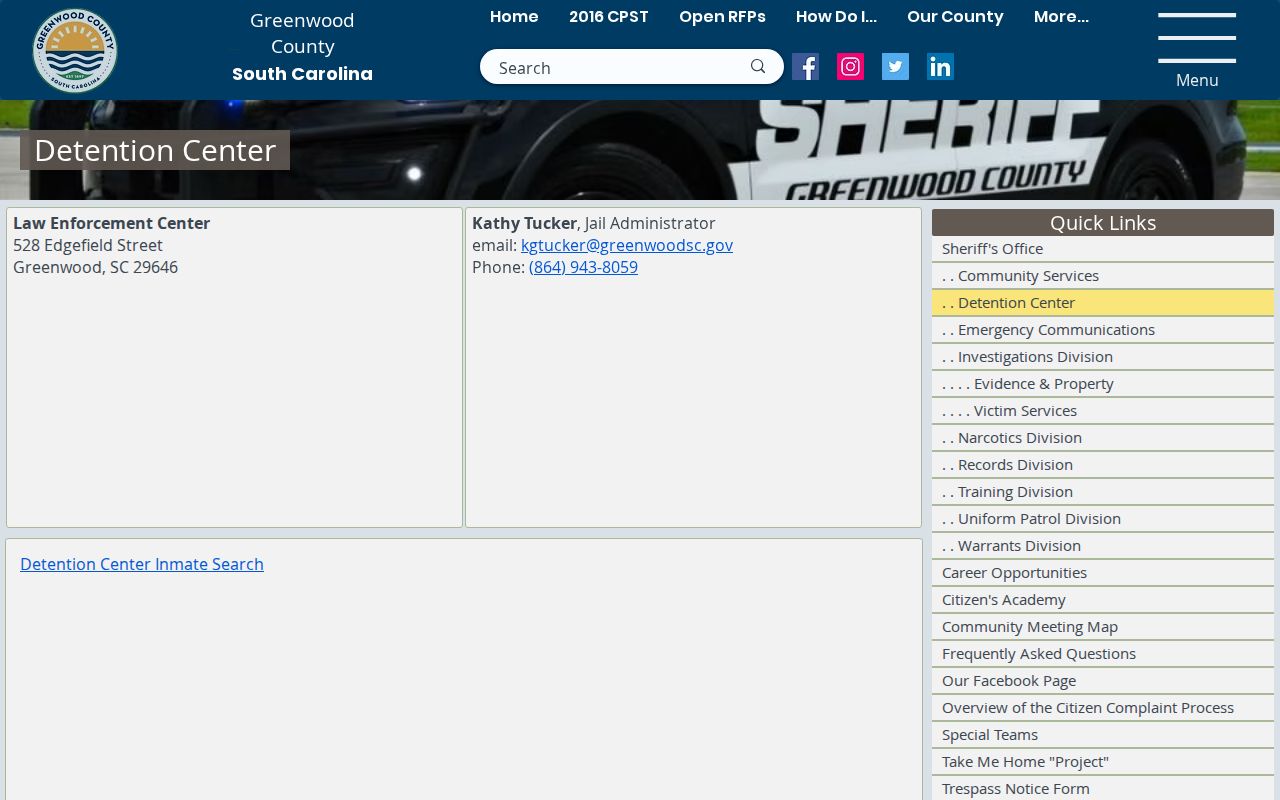
The Greenwood County Detention Center and Leath Correctional Institution are not two names for the same place. The county jail operates at the Law Enforcement Center and holds local pretrial or county custody. If its dynamic inmate link is unavailable, the official detention contacts are 864-943-8059 and 864-943-8063. For an old booking no longer visible, send a focused request to Sheriff's Records with a name, date range, and booking number if known.
The county's Detention Center page supplies the official inmate-search entry and contact block.
Leath C.I. is a state medium-security women's institution in Greenwood County. Current sentenced inmates there are searched through the SCDC Inmate Search, which uses prior-midnight data and excludes county prisoners, released people, community supervision, juveniles, and current SCDC fugitives.
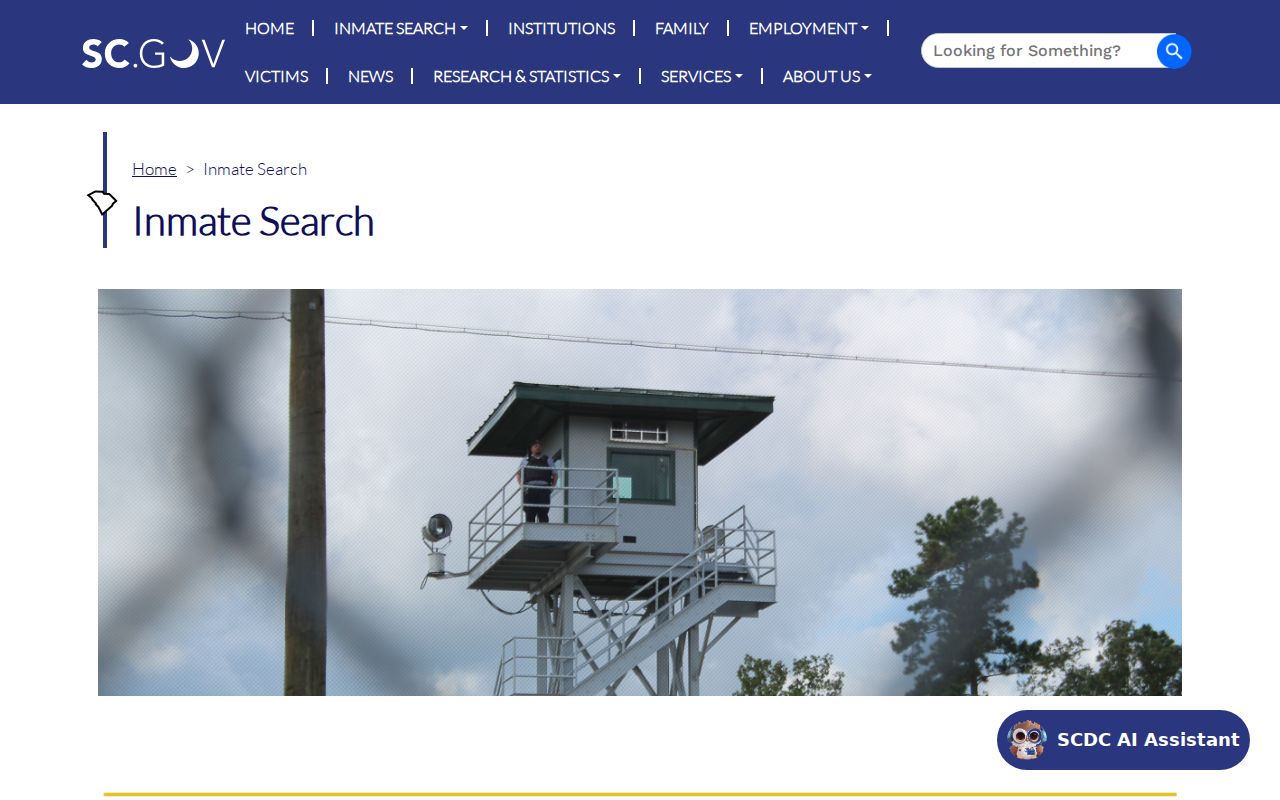
The state disclaimer helps a searcher choose the correct custody layer instead of looking for a county booking in the prison locator.
South Carolina Public Access Laws
The South Carolina Freedom of Information Act allows inspection and copies of existing public records, but requests go to the body that holds them. For records less than 24 months old, a public body generally has ten business days to issue its determination. Older records generally receive a determination within twenty business days. Those are response-decision periods, not guaranteed production dates. Agencies may charge reasonable actual costs and may redact material protected by law.
Key statutes:
S.C. Code §30-4-30 sets public inspection, response, format, and reasonable-fee rules.
S.C. Code §30-4-40 lists exemptions for protected personal and law-enforcement information.
S.C. Code §§23-3-115 and 23-3-120 govern fingerprint-supported criminal-data collection and dissemination.
S.C. Code §17-1-40 addresses qualifying non-conviction records and restricted retention.
FOIA does not force an office to create a new analysis. Juvenile files, victim details, active-investigation material, confidential sources, and sealed records may be withheld or redacted. Ask for the cited legal basis when part of a responsive Greenwood County record is not released.
Greenwood County Warrant Record Fallback
The Sheriff's Warrants Division page says “Coming soon.” No complete official public warrant database was found, and the detention roster must not be presented as one. For a question about your own possible warrant, start with the Warrants Division at 864-943-8032. Next, search the Greenwood Public Index for case-level process. The Clerk at 864-942-8575 handles General Sessions warrants and bonds, while a municipal bench warrant belongs with the court that issued it.
A focused FOIA request may help with an existing public record, but unserved or sealed process can remain unavailable. Verify recall, service, payment, or appearance directly with the issuing court because updates may not reach every agency at once. Never send money based only on an unverified call or message.
Note: A warrant authorizes an action; a booking entry only shows custody that has already occurred.
Restricted, Sealed & Expunged Records
South Carolina expungement is limited to statutory paths. Qualifying dismissed, discharged, nol-prossed, or acquitted charges may receive automatic or no-cost processing under section 17-1-40. Other paths include successful diversion, certain conditional discharges, some first summary convictions after the required period, youthful-offender relief, and qualifying juvenile matters. Violent and many serious or traffic convictions do not fit those routes.
Greenwood applications move through the Eighth Judicial Circuit Solicitor's Office. Obtain the exact case number and disposition, identify the legal category, and use the Solicitor's current expungement channel. No current local fee should be stated until the office confirms it. After a signed order, courts, SLED, prosecutors, and the arresting agency must process their part. If CATCH still shows the charge, SLED advises sending a certified true copy of the order, a recent report, and a stamped return envelope to its Expungement Department.
Greenwood County Supervision Records
Probation and parole are state-run in South Carolina. The SCDPPPS Greenwood County office sits in courthouse room B-01 at 528 Monument Street, with mail sent to 600 Monument Street, Box P-111. Its telephone is 864-942-8652. The public offender search accepts defined combinations of first name, last name, SID, county, and year of birth. Results reflect the prior day and may omit a person whose supervision has ended.
The local office reported a dated snapshot on July 29, 2026: 538 probation cases, 32 parole cases, 12 community-supervision cases, 12 supervised-reentry cases, 11 Jessie's Law tracking cases, and no supervised-furlough cases. Counts change. Use them as a view of office workload, not as a current total or a count of convictions. Court records remain the source for the sentence itself, while the SCDPPPS search answers the narrower current-supervision question.
City-by-City Criminal Records in Greenwood County
City police reports stay with the department that created them, even when the resulting booking is held by Greenwood County. Municipal courts keep their lower-level case records, while indictable matters move into General Sessions. That custody split makes a city-level starting point useful for Greenwood, Ninety Six, and Ware Shoals. Ware Shoals also crosses into Laurens County, so the incident location and charging venue must be confirmed before relying only on Greenwood County systems.
Greenwood Record Check
22,745 estimated residents in 2025. City police reports and Municipal Court records begin with city offices.
Ninety Six Record Check
2,076 residents in the 2020 Census. The town police and clerk maintain separate local channels.
Ware Shoals Record Check
1,701 total residents in 2020. Confirm the county side before choosing a county court or jail.
Greenwood County Prosecution Records
South Carolina uses the title Circuit Solicitor, not district attorney. The Eighth Judicial Circuit Solicitor serves Greenwood and Abbeville counties, screens General Sessions matters, prepares the docket, operates diversion programs, and administers statutory expungement applications. That circuit-wide name explains why the prosecutor's official site is not branded only for Greenwood County.
The Solicitor is not the public court-file counter. Filed warrants, bonds, indictments, docket events, dispositions, fines, and restitution remain with the Greenwood Clerk of Court. The public defender is also not a record custodian. For appointed-defense contacts, use the state indigent-defense circuit directory. For a case copy, certified disposition, or docket attachment, use the Clerk and identify the General Sessions case number and exact document requested.